
Feeding farm animals has always been about more than simply filling troughs. Good feed influences growth, milk production, egg quality, digestion, immune health, and even animal behavior. Over the past decade, more farmers and small-scale livestock owners have started paying closer attention to what actually goes into feed mixtures, and that shift has brought growing interest in organic feed for farm animals.
For some, the decision comes from environmental concerns. Others focus on animal welfare or long-term soil health. In many cases, it begins with a simple desire to move away from heavily processed feed ingredients and toward something that feels more natural and transparent.
Organic feeding is not necessarily simple, though. It involves understanding how crops are grown, how ingredients are sourced, and how nutrition changes between species. Chickens do not require the same diet as cattle, and goats process feed differently than pigs or horses. What works well for one farm may create imbalances on another.
The conversation around organic livestock feed has become more thoughtful in recent years. Farmers are weighing cost against sustainability, convenience against quality, and tradition against newer nutritional research. Somewhere in the middle, practical feeding strategies are beginning to emerge.
What Makes Feed Organic
The term “organic” is often misunderstood, especially outside agricultural circles. Organic feed is not merely feed labeled as natural or chemical-free. It typically refers to crops and ingredients grown without synthetic pesticides, genetically modified organisms, or artificial fertilizers.
Organic grain production also tends to follow stricter soil management practices, including crop rotation and reduced chemical input. For livestock owners, this means the feed itself comes from a farming system designed around ecological balance rather than maximum short-term yield.
That does not automatically mean organic feed is nutritionally superior in every case. Nutrition still depends on formulation, freshness, and ingredient quality. However, many farmers appreciate the reduced chemical exposure and the emphasis on traceable sourcing.
Another important distinction is medication use. Certified organic systems often restrict certain additives, antibiotics, and growth-promoting substances commonly found in conventional livestock production.
For smaller farms, even partial shifts toward organic feed sometimes reflect a broader philosophy about farming itself rather than a strict certification goal.
Organic Grains and Their Role in Livestock Diets
Grains remain one of the most common components of organic feed for farm animals. Corn, oats, barley, wheat, and milo are widely used across different livestock operations because they provide concentrated energy.
Organic corn is especially popular in poultry feed due to its calorie content. Chickens burn energy quickly, and grain-based diets help support egg production and healthy body weight. Organic oats are often favored for horses because they are relatively digestible and produce steady energy without excessive starch spikes.
Barley appears frequently in cattle and goat diets, particularly in cooler regions where it grows well. Some farmers appreciate its versatility because it can be fed rolled, cracked, or sprouted depending on the feeding system.
Still, relying too heavily on grain creates challenges. Excessive grain intake may upset digestion in ruminants such as cows and sheep, which naturally process forage more efficiently than concentrated starches.
This is one reason many experienced livestock keepers view organic feeding less as a single product choice and more as a balanced nutritional system.
The Importance of Organic Hay and Forage
For grazing animals, forage matters just as much as grain—often more.
Organic hay, pasture grasses, and forage crops form the backbone of diets for cattle, sheep, goats, and horses. Good-quality forage supports digestion, encourages natural feeding behavior, and helps maintain healthy rumen function in ruminants.
One noticeable difference with organic pasture management is the focus on soil health. Farmers using organic systems often pay close attention to rotational grazing, compost use, and biodiversity within pasture areas. Healthy soil tends to produce stronger forage over time, though achieving that balance requires patience.
Alfalfa remains one of the most widely used organic forage crops because of its high protein content. Dairy goats and lactating cows particularly benefit from nutrient-dense forage during periods of increased production.
Mixed grass hay also plays an important role, especially for horses that require steady fiber intake without overly rich feed.
Weather, of course, affects forage quality every season. Drought conditions, excessive rain, or poor storage can reduce nutritional value regardless of whether feed is organic or conventional.
Many livestock owners eventually realize that feed quality depends not only on ingredient type but also on handling, storage, and freshness.
Organic Feed for Poultry
Poultry diets tend to be more nutritionally sensitive than many people expect. Chickens require balanced protein, calcium, vitamins, and energy to maintain healthy feathering and consistent egg production.
Organic poultry feed often includes grains combined with soybean meal, sunflower meal, peas, flaxseed, or fish meal depending on the formulation. Some smaller farms supplement feed with kitchen scraps, garden greens, insects, or fermented grains.
Pasture access changes poultry nutrition significantly as well. Chickens naturally forage for bugs, seeds, and vegetation when allowed outdoors. That behavior not only diversifies their diet but also encourages activity and reduces boredom.
Still, pasture alone rarely provides complete nutrition for modern laying hens. Supplemental feed remains essential, especially during winter or dry periods when natural forage becomes limited.
Duck and turkey diets vary slightly from chicken feed requirements, though many principles overlap. Protein needs, in particular, tend to shift depending on growth stage and breed type.
The challenge with organic poultry feed is often consistency. Because organic ingredients can fluctuate in availability and price, feed formulations sometimes change seasonally.
Feeding Organic Diets to Cattle and Dairy Animals
Cattle feeding systems vary enormously between farms, but forage remains central in most organic setups.
Grass-fed systems have become closely associated with organic livestock farming, though not all organic cattle are exclusively pasture-raised. Many farms still use supplemental grains during winter, drought periods, or finishing stages.
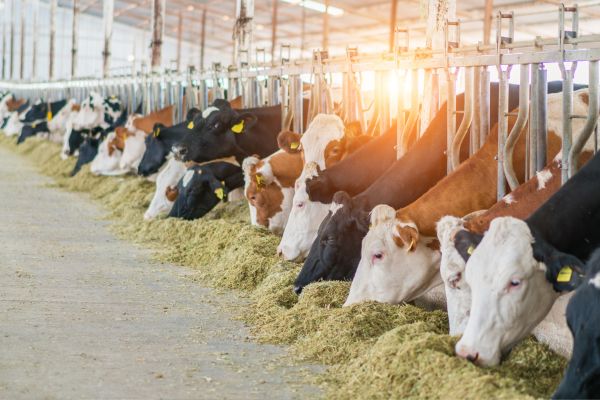
Dairy cows require especially careful nutritional balancing. Producing milk demands large amounts of energy, protein, calcium, and water. Organic dairy operations often rely on combinations of pasture forage, haylage, silage, and supplemental grain blends.
One interesting aspect of organic dairy farming is how strongly seasonal pasture quality influences production. Fresh spring pasture can noticeably improve milk richness and animal condition, while dry summer forage may require additional supplementation.
Calves also need special attention during feed transitions. Young animals adapt gradually to forage-based diets, and abrupt changes sometimes create digestive stress.
Experienced cattle farmers often describe feeding less as a fixed formula and more as a daily adjustment process shaped by weather, pasture condition, and herd behavior.
Organic Feed for Pigs and Goats
Pigs and goats represent two very different feeding challenges despite both adapting well to small farm environments.
Pigs are omnivores with flexible diets, but balanced nutrition still matters enormously for healthy growth. Organic pig feed usually combines grains, legumes, and protein-rich ingredients to support muscle development and energy needs.
Some small farms supplement pig diets with vegetable scraps, orchard windfalls, or dairy byproducts, though balance remains important. Excessive low-protein scraps can reduce overall nutritional quality.
Goats, meanwhile, are natural browsers rather than true grazers. They prefer shrubs, weeds, leaves, and varied vegetation over simple pasture grass. Organic goat feeding often works best when animals have access to diverse forage areas alongside hay and mineral supplementation.
Minerals deserve particular attention with goats because deficiencies develop quietly. Copper, selenium, and calcium imbalances can create long-term health problems even when overall feed quantity appears adequate.
One of the more interesting realities of livestock feeding is that animals often communicate nutritional imbalance through behavior before physical symptoms become obvious.
Cost Challenges and Practical Realities
Organic feed frequently costs more than conventional alternatives, and that reality shapes many farm decisions.
Higher production costs, certification requirements, and lower crop yields all contribute to increased pricing. For small farms with limited budgets, fully organic feeding sometimes feels financially difficult.
As a result, some farmers adopt hybrid approaches. They prioritize organic forage while using limited conventional supplements, or they grow portions of feed themselves to reduce dependence on purchased products.
Feed waste also becomes more noticeable when costs rise. Better storage practices, careful rationing, and weather-protected feeders can make a surprising difference over time.
Interestingly, many livestock owners who transition toward organic systems mention that they become more attentive overall. Feed quality, pasture condition, and animal behavior often receive closer observation simply because the feeding process becomes more intentional.
The Relationship Between Soil, Feed, and Animal Health
One reason organic feed discussions continue growing is the increasing awareness that livestock nutrition begins in the soil itself.
Healthy soil produces stronger forage and healthier crops. Those crops, in turn, support animal nutrition more effectively. It sounds simple, but modern agriculture sometimes separated these relationships in pursuit of higher yields and faster production.
Organic systems attempt to reconnect those pieces. Compost management, crop rotation, reduced chemical dependency, and pasture diversity all contribute to long-term soil fertility.
That does not mean organic farming is automatically easy or universally better. Weed pressure, weather unpredictability, and lower yields create genuine challenges.
Still, many farmers find value in systems that focus on sustainability rather than short-term production alone. Animals raised on diverse forage and balanced diets often show stronger condition, calmer behavior, and improved resilience over time.
The connection between land health and animal health becomes difficult to ignore once farmers begin observing it season after season.
Conclusion
Choosing organic feed for farm animals involves more than changing what goes into a feed bin. It reflects a broader approach to livestock care, soil management, and agricultural balance.
For some farms, organic feeding supports environmental goals or animal welfare priorities. For others, it simply feels like a more thoughtful and connected way to raise livestock. The process is rarely perfect, and challenges with cost, sourcing, and seasonal consistency remain very real.
What stands out most is that successful feeding systems are usually built around observation rather than rigid ideology. Healthy animals, productive pastures, and balanced nutrition depend on paying attention to daily conditions and adjusting when necessary.
Organic feeding continues evolving as more farmers experiment, adapt, and share practical experience. In the end, the most effective systems are often the ones that respect both the animals being fed and the land producing the feed itself.